
It feels like our communities are fraying. Here's how we can weave them back together.
Check out the Social Trust Index for your neighborhood
Washougal, WA, was once the type of tight-knit community where neighbors were familiar with one another and a general sense of harmony prevailed.
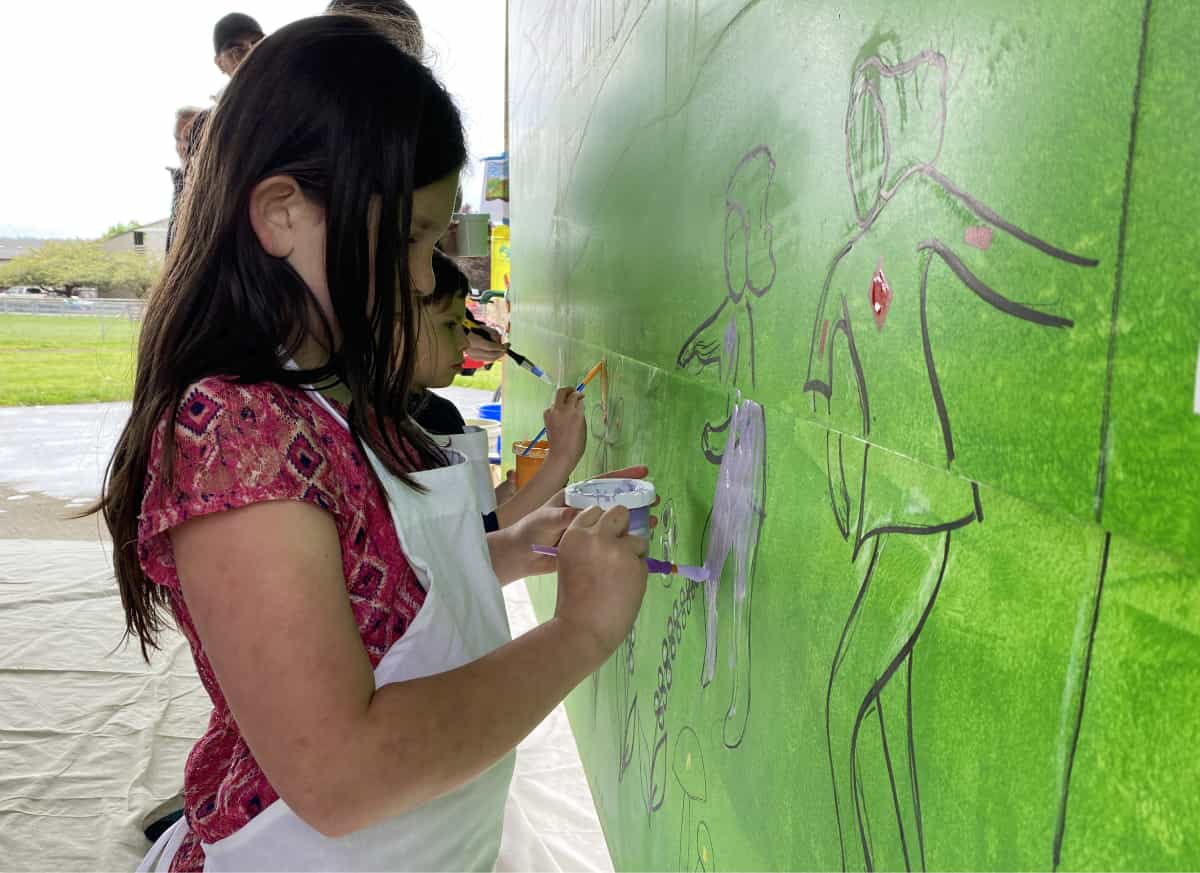
Instead of waiting for outside help, a few neighbors founded the East County Citizens' Alliance. They actively invited neighbors that didn't typically interact with each other to join "no controversy" activities, like picking up litter on the highway, planting community gardens, and mentoring youth.
It’s easy to look at the news and feel like our social problems are too big to solve.
Recent polls show most people identify polarization as the single biggest non-economic issue facing the US. We are experiencing historic levels of disconnection—41% of adults report feeling lonely and 44% feel that they don’t get adequate social and emotional support.
But as we learned in Washougal, the situation is far from hopeless.
In fact, 74% of Americans say they want to take action and work together across differences to address shared problems in their communities.
All across the country, there are already people doing just that. We call them weavers, because they weave our communities back together, thread by thread.
Want to become a weaver?
We collected data for every neighborhood in the US to identify the assets and strategies that you can use to strengthen your local community.
Let’s look at your neighborhood.
Or skip this step.
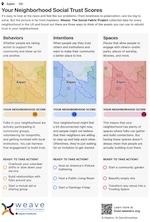
This indicator is calculated by looking at 16 different data points, including whether someone attended a book club in the past 12 months or volunteered in a nonprofit organization.
This indicator is calculated by looking at 15 different data points, including social media activity and surveys on trust.
This indicator is calculated by counting 15 types of spaces located within ¼ of a mile from your neighborhood, ranging from rec centers to coffee shops.
In our research, we identified three key indicators of social trust in local communities.
Trusting Behaviors measures whether people are taking action to support the community and show up for one another.
Trusting Intentions are when people say they trust other people and institutions and want to make their community a better place to live.
Trusting Spaces are the places that allow people to engage with others—public parks, places of worship, barbershops, libraries, and more.
Each neighborhood is now shaded by its strongest trust trait.
Your neighborhood's strongest trait is {{neighborhoodStrongest}} and the weakest trait is {{neighborhoodWeakest}}.
We’ve analyzed which of these traits are strongest for every neighborhood in the U.S. Use the map to see how your neighborhood compares to other communities.
Or keep scrolling to see how you can use this information to build trust in your neighborhood.
Start by putting yourself on the Trust Map
Within 30 miles of your community, there are 40 people who care about weaving and get ideas and updates from Weave. Join them to get Weave’s free weekly newsletter and find ways to start weaving where you live.
Over the next three weeks, we’ll email you curated resources showing how you can use your neighborhood’s best assets to foster connection with neighbors.
Afterwards, you’ll get our weekly newsletter, where we share stories, grants, and other resources.
Now, let’s get started exploring your biggest opportunity.
Ready to start weaving?
There are thousands of weavers all over the country. Weave: The Social Fabric Project connects, supports, and invests in them.
Now that you are ready to weave your community together, you can invite other folks to join.
We’ve created a customized worksheet for your community that you can print out and share with neighbors. It will help you inspire others to join and coordinate your efforts.
Join the Weaving Us community
If you are a weaver, or want to become one, Weaving Us is your online home. Join folks from all over the country (and world!) who are sharing tools, resources, and friendship to help our communities thrive.
Join Weaving UsCelebrate your weaving and invite others to join
Share with others how you are building trust this week with the hashtag #ImAWeaver. We’ve created this simple template for instagram stories that you can use.
Share your story